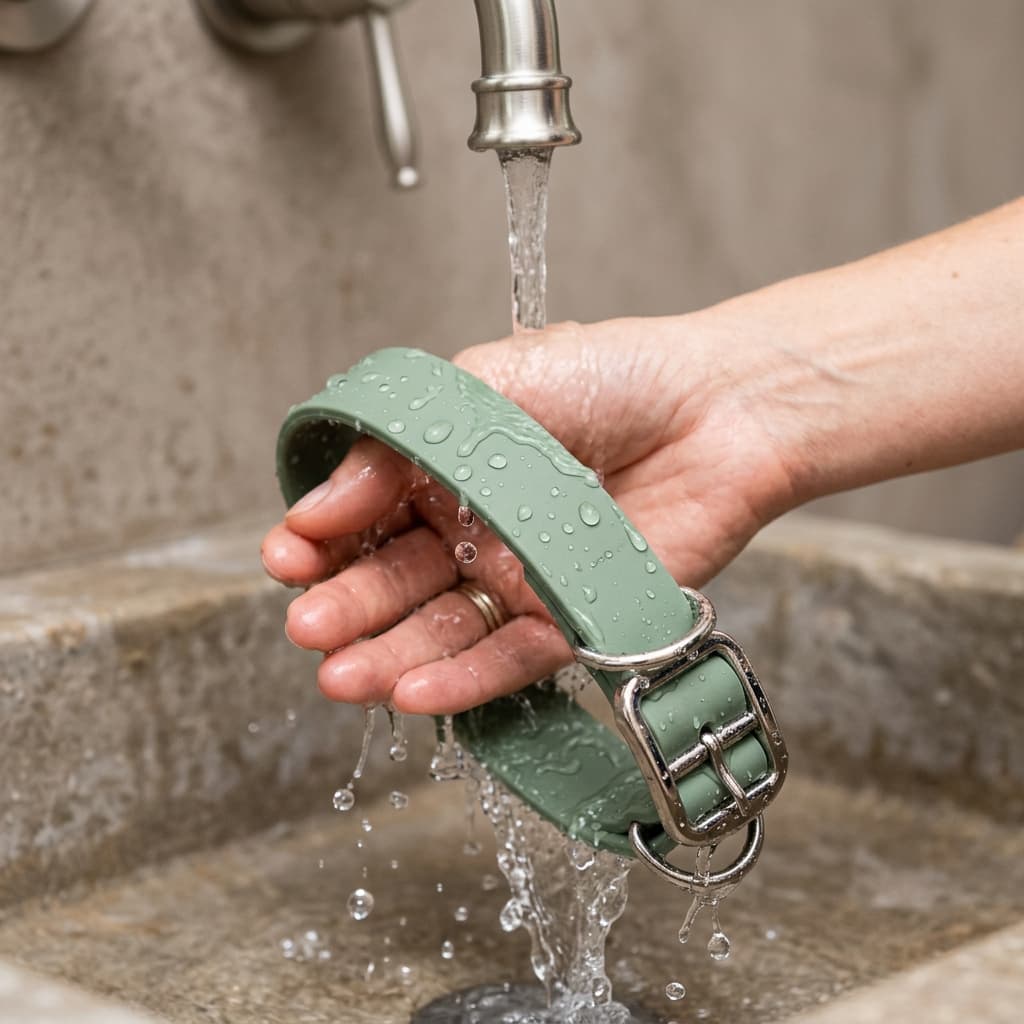
Most people don't think about what their dog's collar is made of until something goes wrong. The collar starts to smell. The dye fades after a summer. The stitching pulls at the buckle. At that point, the material conversation becomes unavoidable.
We built Lu & Liv around thinking about this very carefully from the beginning — and the conclusion we reached is that silicone is the right material for a dog collar that's meant to last. Not as a trend, not as a premium signal, but because of what the material actually is and how it actually performs.
Here's the full explanation: what silicone is, how it compares to the alternatives, why it's safe for dogs, how prints work in it, and what to expect in terms of care and lifespan.
What Is Silicone?
Silicone is a synthetic polymer — a chain of silicon and oxygen atoms with organic groups attached. Its chemistry is closer to glass and quartz (both forms of silicon dioxide) than to conventional plastics, which are carbon-based polymers.
The key properties that follow from silicone's chemistry:
Non-porous. Unlike nylon or leather, silicone has no pores or weave structure for water, bacteria, or odor-causing compounds to enter. This is the property that makes it genuinely waterproof rather than water-resistant.
Temperature stable. Silicone remains flexible and stable across a wide temperature range — roughly -55°C to 300°C — without cracking, stiffening, or degrading. A collar left in a hot car, dried in the sun, or worn in cold weather performs the same as one kept in climate-controlled conditions.
Chemically inert. Silicone doesn't react with most chemicals, doesn't leach plasticizers, and doesn't off-gas compounds of concern. This is why it's used in medical implants, food-grade bakeware, and products designed for direct contact with babies.
How Silicone Compares to Other Collar Materials
| Material | Waterproof? | Odor Resistance | Print Quality | Washable? | Lifespan |
|---|---|---|---|---|---|
| Nylon | No (water-resistant) | Low — absorbs moisture | Good initially, fades | Yes, but degrades | 1–2 years active |
| Leather | No | Poor when wet | Limited | Requires conditioning | Variable, high maintenance |
| Biothane | Yes | Excellent | Solid colors only | Yes, wipe clean | 5+ years |
| Silicone | Yes | Excellent | Embedded, excellent | Yes, rinse and wipe | 5+ years |
Where silicone clearly leads: waterproofing, odor resistance, and the ability to carry complex print designs that remain stable over time. Where it differs from nylon: it's slightly heavier per unit area (though still lightweight in absolute terms) and has a smooth rather than woven surface feel.
Is Silicone Safe for Dogs?
Yes — with one qualifier to understand.
Food-grade silicone, the type used in FDA-compliant cookware and medical devices, is non-toxic and biocompatible. It contains no BPA, no phthalates, and no plasticizers of concern. It doesn't leach chemicals into food or skin and is considered inert for human and animal contact purposes.
The qualifier: not all silicone products are food-grade. Industrial silicone or silicone used in non-food applications may contain fillers or additives that aren't suitable for extended skin contact. When evaluating a silicone collar, look for explicit food-grade or medical-grade labeling, or ask the manufacturer about the silicone grade used.
Silicone is also hypoallergenic — its smooth, non-reactive surface is less likely to cause contact dermatitis or neck irritation than some nylon materials, which can have rough weave edges that create friction.
How Do Prints Work on Silicone?
This is the question that's most specific to silicone dog collars, because it's the innovation that makes the aesthetic case.
There are two ways to apply color to silicone: surface printing and color embedding.
Surface printing applies ink or pigment on top of the silicone surface. It's faster and cheaper. The limitation: applied surface prints are subject to abrasion and flex — they can chip, peel, or fade over time, especially at the edges and folds of a collar that flexes constantly with the dog's movement.
Color embedding integrates the pigment into the silicone itself during the molding or curing process. The color is part of the material, not on top of it. This is why the design can't be scratched off — there's no surface layer to remove. The collar's appearance is as durable as the silicone itself.
At Lu & Liv, our print designs use embedded color throughout. The pattern is in the material, not on it — which is why the collar looks the same after two years of beach trips as it did when it arrived.
How to Care for a Silicone Dog Collar
The maintenance case for silicone is simple: it mostly doesn't need any.
Daily: nothing required. The collar doesn't accumulate odor from normal wear.
After water exposure or muddy walks: rinse under warm water, wipe with a cloth, let air dry. Done. The collar is ready to wear again immediately.
Deep clean: a drop of mild dish soap, a soft brush (an old toothbrush works well), rinse thoroughly. This is effectively the same approach you'd take with a food-grade silicone baking mat.
What to avoid: harsh chemical cleaners, bleach, and abrasive scrubbers. None of these are necessary — and bleach in particular can degrade silicone over time with repeated exposure.
With normal use and basic maintenance, a silicone dog collar should last three to five years or more. Most of our customers will wear out the dog's patience with beach trips before they wear out the collar.
Who Should Use a Silicone Dog Collar?
Active dogs in wet environments — beach, ocean, lakes, streams, mud, coastal humidity — are the obvious case. Silicone is the only material that handles all of these without degradation or odor.
Dogs with skin sensitivities. Silicone's smooth, non-reactive surface reduces friction-caused irritation that can occur with some nylon weaves. For dogs prone to contact dermatitis or hot spots around the collar area, it's worth trying a silicone collar specifically.
Aesthetics-forward dog parents. Silicone now carries genuine print design — original artwork, complex patterns, embedded color — that holds up over the life of the collar. You no longer have to choose between a collar that lasts and a collar that looks like it was chosen with care.
One honest limitation: working dogs who require specific hardware compatibility for tracking leads, clip attachments, or working-dog rings should verify hardware specifications with the manufacturer. The silicone body of the collar is universally durable; the hardware question depends on the specific use case.
The Material That Changed What Was Possible
The reason Lu & Liv exists is that silicone made something possible that wasn't before: a collar that is genuinely waterproof, genuinely beautiful, and genuinely durable over time. Each of those was achievable individually. Silicone is the first material that delivers all three together.
Browse our silicone dog collar collection or read our guide to waterproof dog collars for a deeper look at how silicone compares to every other option. Join the waitlist below to see the first collection when it launches.
Join the Waitlist
We're almost ready to launch. If you want to be the first to see the collection — and claim your launch discount — join below.
You'll be the first to see the collection · 15% off at launch · Unsubscribe anytime.